Your boiler keeps making strange noises. The heat takes longer to kick in every winter. Or maybe you just got a repair quote that made you wonder if it’s finally time to replace the whole thing. If you’re searching for a reliable boiler installation service across the Lower Mainland, you’re probably weighing a repair against a full replacement, and you want a straight answer on cost, timing, and who to trust with the job.
This guide walks through everything a Port Coquitlam homeowner needs to know before installing a new boiler: the signs of a failing system, the boiler types available today, realistic cost ranges, what the installation day actually looks like, and how to pick a qualified installer. No fluff, just what you need to make a confident decision.
Is It Time to Replace Your Boiler?
Direct answer: Most residential boilers last 15 to 20 years. If yours is in that range and needs frequent repairs, is losing efficiency, or is leaking, replacement is usually more cost-effective than continuing to repair it.
Signs Your Boiler Is Nearing the End
A few warning signs tend to show up before a full breakdown:
- Uneven heating or rooms that never quite warm up
- Rising gas bills despite normal usage
- Rust, corrosion, or water pooling near the unit
- Frequent pilot light or ignition problems
- Strange banging, whistling, or kettling sounds
- Repair costs that keep climbing year after year
If you’re seeing two or more of these, it’s worth getting a professional inspection before the system fails during a cold snap.
What Is Residential Boiler Installation?
Residential boiler installation is the process of removing an old or non-functioning boiler and replacing it with a properly sized, correctly vented unit that heats your home’s air or water through a hydronic (water-based) heating system. Unlike a furnace, which heats air directly, a boiler heats water that’s circulated through radiators, baseboards, or radiant floor tubing.
Installation isn’t just swapping one box for another. It involves gas line inspection, venting, water line connections, safety controls, and in most cases a permit signed off by a licensed gas fitter.
Types of Boilers for Lower Mainland Homes
Choosing the right boiler type depends on your home’s size, existing heating system, and hot water needs.
Gas Boilers
Natural gas boilers remain the most common choice for BC homes because natural gas is widely available and generally more affordable to run than electric resistance heat. A residential gas boiler installation typically pairs with existing hydronic piping, making it a natural fit for homes that already have a boiler-based system.
Combi Boilers
A combi (combination) boiler heats your home and provides on-demand hot water from a single compact unit, with no separate hot water tank needed. Residential combi boiler installation is popular in smaller homes, condos, and townhomes across Vancouver and the Lower Mainland where mechanical room space is limited.
Condensing Boilers
Condensing boilers capture extra heat from exhaust gases that a standard boiler would vent outside, pushing efficiency ratings well above older models. A condensing boiler installation for a Lower Mainland home is often the best long-term value, since it can lower monthly gas costs while still fitting into a similar footprint as the old unit.
Boilers for Radiant Floor and Hydronic Heat
If your home uses in-floor heating, a residential radiant floor heating boiler installation needs a unit sized and controlled specifically for that loop. Radiant systems run at lower water temperatures than baseboard heat, so the boiler and its controls need to be matched correctly, or you’ll end up with rooms that never quite reach temperature.
Benefits of Upgrading to a High-Efficiency Boiler
A high-efficiency home boiler replacement offers more than just a working heating system:
- Lower monthly heating costs from a higher AFUE (efficiency) rating
- More consistent comfort, especially in older homes with uneven heat
- Quieter operation compared to aging, worn components
- Fewer breakdowns, since new units come with modern safety controls
- Access to utility rebates that reduce the upfront cost
How Much Does Residential Boiler Replacement Cost in the Lower Mainland?
Direct answer: Residential boiler replacement cost in the Lower Mainland typically depends on boiler type, home size, venting requirements, and whether existing piping can be reused. Combi and condensing units generally cost more upfront than standard gas boilers but offer better long-term efficiency.
Several factors move the price up or down:
- Boiler type-combi and high-efficiency condensing units cost more than standard models
- Sizing a boiler that’s too small or too large for your home wastes money either way
- Venting changes – condensing boilers often need new venting, which adds labor
- Existing piping condition – older galvanized or corroded lines may need replacement
- Permit and inspection fees
- Removal and disposal of the old unit
Because every home’s mechanical setup is different, the most accurate way to get a number is a free, no-obligation in-home assessment rather than a quote based on square footage alone.
How Long Does Boiler Installation Take?
Direct answer: A straightforward residential boiler installation usually takes one full day. Jobs that involve new venting, piping upgrades, or gas line work can take longer.
Same-day home boiler replacement is often possible when the new unit is a direct replacement using existing gas and water connections. If your home needs venting changes or the old system has outdated piping, your installer should walk you through a realistic timeline upfront rather than promising a rushed job that skips steps.
The Boiler Installation Process, Step by Step
In-home assessment. A technician evaluates your current system, home size, and heating needs to recommend the right boiler size and type.
- Quote and scheduling. You receive upfront pricing before any work begins.
- Old boiler removal. The existing unit is safely disconnected and removed.
- Gas and water line inspection. Lines are checked and updated if needed to meet current code.
- New boiler installation. The unit is mounted, connected, and vented according to manufacturer specs and BC code requirements.
- Testing and safety checks. Technicians confirm proper ignition, pressure, and shutoff function.
- Permit sign-off. A licensed gas fitter completes the work under proper permit, as required in British Columbia.
- Walkthrough. You’re shown how to operate and maintain the new system.
Local Considerations for Port Coquitlam and the Tri-Cities
Homes in Port Coquitlam and across the Tri-Cities see a real range of temperatures between summer and winter, and many properties in this area, especially older homes near Wilson Center or the Riverview lands, still run original hydronic boiler systems installed decades ago. Older housing stock in this part of the Lower Mainland often means aging gas lines and piping that need a closer look before a new boiler goes in.
If you’re in a newer townhome or condo in the Tri-Cities, mechanical room space is usually tighter, which is where a compact combi boiler installation tends to make more sense than a larger tank-style setup.
Homeowners across Coquitlam, Surrey, Burnaby, Richmond, and Langley face similar decisions, and a residential boiler heating system installation should always account for the home’s age, insulation, and existing distribution system, not just the brand of boiler.
Common Boiler Installation Mistakes to Avoid
Avoid these pitfalls when replacing a residential boiler:
- Oversizing the unit. A boiler that’s too big cycles on and off constantly, wasting energy and shortening its lifespan.
- Skipping the permit. Unpermitted work can cause problems with home insurance and resale.
- Reusing incompatible piping. Old piping that isn’t rated for a new condensing unit can lead to leaks or corrosion.
- Ignoring venting requirements. Condensing boilers need specific venting; improper venting is a safety issue, not just a performance one.
- Choosing price over qualifications. The cheapest quote isn’t useful if the installer isn’t a licensed gas fitter.
How to Choose the Right Boiler Installation Contractor
Look for a company that checks these boxes:
- Licensed gas fitters certified through Technical Safety BC
- Upfront, written pricing before work begins
- Proper permits pulled on every installation
- Manufacturer-backed warranties on the equipment installed
- Local service area that actually covers your city, not just a listing
Best residential boiler contractors in the Lower Mainland will walk you through your options honestly, including when a repair still makes sense instead of pushing a full replacement.
Financing and Rebates for Boiler Replacement
Boiler replacement is a significant investment, and most homeowners don’t pay the full cost out of pocket. Utility providers such as FortisBC and programs like CleanBC periodically offer rebates on qualifying high-efficiency heating equipment, and rebate amounts and eligibility change over time, so it’s worth confirming current programs directly with the provider or your installer before budgeting. Flexible financing options can also help spread the cost of a residential boiler installation over manageable monthly payments instead of a single upfront bill.
FAQs
How much does a residential boiler installation cost in the Lower Mainland?
Cost varies by boiler type, home size, and whether new venting or piping is required. Combi and condensing boilers typically cost more upfront than standard units but can lower ongoing gas bills. A home assessment gives the most accurate number.
How long does a boiler last before it needs replacing?
Most residential boilers last 15 to 20 years with regular maintenance. Frequent repairs, rising energy bills, or visible corrosion are signs it’s nearing the end of its service life.
Is a combi boiler a good fit for my home?
Combi boilers work well in smaller homes, condos, and townhomes where space is limited and hot water demand is moderate. Larger homes with multiple bathrooms may be better served by a separate boiler and hot water tank setup.
Do I need a permit for boiler installation in British Columbia?
Yes. Gas boiler installations in BC require a permit and must be completed or signed off by a licensed gas fitter through Technical Safety BC.
Can a boiler be installed the same day it’s removed?
Often, yes, when the new unit is a direct replacement using existing gas and water lines. Jobs requiring new venting or piping upgrades typically take longer.
What’s the difference between a furnace and a boiler?
A furnace heats and circulates air through ductwork. A boiler heats water, which is then circulated through radiators, baseboards, or radiant floor tubing to warm the home.
Are high-efficiency boilers worth the extra upfront cost?
For most homeowners planning to stay in their home for several years, yes. Higher efficiency ratings generally mean lower monthly gas costs and can offset the higher installation price over time.
Do you offer emergency boiler installation across the Lower Mainland?
If your boiler fails completely, especially during colder months, a licensed heating contractor can often prioritize an emergency assessment and, when possible, offer expedited installation to restore heat quickly.
Get a Boiler Installation Quote Today
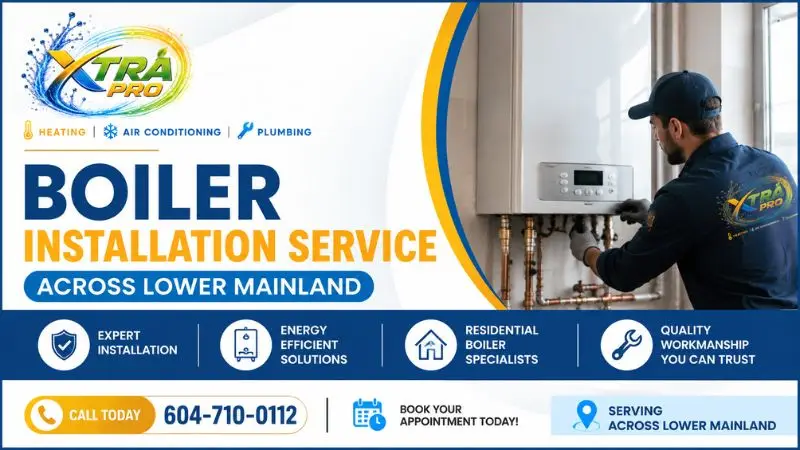
Choosing the right boiler and installer shouldn’t be a guessing game. Xtra Pro Heating, Air Conditioning & Plumbing Ltd provides boiler installation service across the Lower Mainland, with licensed gas fitters, upfront pricing, and financing options to help make a residential boiler replacement more affordable. Whether you’re in Port Coquitlam, Coquitlam, or elsewhere in the Tri-Cities, our team can assess your current system and walk you through the right option for your home.
Ready to talk about your boiler? Contact Xtra Pro today to schedule a free, no-obligation in-home assessment and get upfront pricing on your boiler installation.