
10 Signs: Your Heat Pump Needs Repair
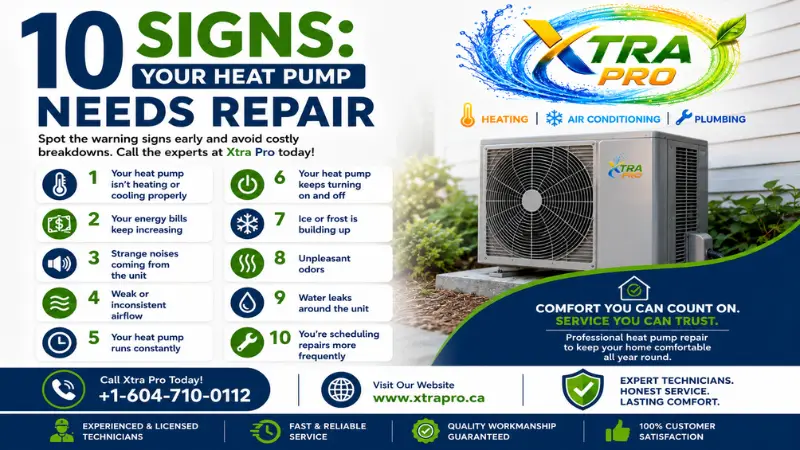
Introduction A heat pump is one of the hardest-working systems in your home, that provides efficient heating during the winter and dependable cooling throughout the summer. Because it operates year-round, it naturally experiences wear and tear over time. While minor issues may seem harmless at first, ignoring them can lead to reduced efficiency, higher energy bills, expensive repairs, or even complete system failure. The good news is that your heat pump often gives warning signs before a major breakdown occurs. Recognizing these early symptoms allows you to schedule professional repairs before a small issue becomes a costly problem. We’ll discuss the ten most common signs your heat pump needs repair, why these problems occur, and how timely service can help extend the life of your HVAC system while keeping your home comfortable in every season. Here are the points below: 1. Your Heat Pump Isn’t Heating or Cooling Properly One of the first signs something is wrong is inconsistent indoor comfort. If your heat pump struggles to warm your home during winter or fails to keep it cool during summer, the system is likely operating below peak performance. Several issues can reduce heating and cooling capacity, including: If adjusting your thermostat doesn’t solve the problem, it’s time to schedule a professional inspection. 2. Your Energy Bills Keep Increasing Have your electricity bills increased even though your energy usage hasn’t changed? An inefficient heat pump often consumes more electricity because it must run longer to maintain the desired indoor temperature. Higher energy bills may result from: Repairing these issues promptly can restore efficiency and reduce monthly operating costs. 3. Strange Noises Coming From the Unit Heat pumps normally produce a soft humming sound while operating. Loud or unusual noises are usually signs that internal components need attention. Watch for sounds such as: These noises may indicate loose components, worn bearings, electrical problems, or compressor issues. Ignoring them could result in more extensive damage over time. 4. Weak or Inconsistent Airflow If little air is coming from your vents, your heat pump may be struggling to circulate conditioned air throughout your home. Common causes include: Poor airflow forces your system to work harder, reducing efficiency while increasing wear on critical components. 5. Your Heat Pump Runs Constantly During extremely hot or cold weather, longer operating cycles are normal. However, your heat pump should still cycle off periodically. If it seems to run continuously throughout the day, possible causes include: Continuous operation not only increases electricity costs but also shortens the lifespan of your equipment. 6. Your Heat Pump Keeps Turning On and Off Short cycling occurs when your heat pump starts and stops repeatedly without completing a full heating or cooling cycle. Possible causes include: Frequent cycling increases wear on important components while reducing comfort and efficiency. 7. Ice or Frost Is Building Up It’s normal for a heat pump to develop a light layer of frost during winter before entering its automatic defrost cycle. However, excessive ice buildup or frost that doesn’t disappear is a sign that something isn’t working properly. Possible causes include: Ignoring excessive ice buildup can eventually damage expensive components such as the compressor. 8. Unpleasant Odors A properly functioning heat pump shouldn’t produce unpleasant smells. Different odors often indicate different problems: If unusual odors continue after replacing the air filter, contact a qualified HVAC technician as soon as possible. 9. Water Leaks Around the Unit Water pooling around your indoor unit is never normal and should be investigated promptly. Possible causes include: Ignoring leaks can lead to water damage, mold growth, and additional repair costs. 10. You’re Scheduling Repairs More Frequently If your heat pump requires repairs every few months, it may be nearing the end of its service life.Repeated repairs often indicate that major components have begun to wear out due to age or prolonged use.Instead of continuing to invest in frequent repairs, ask an HVAC professional whether replacing the system would be the more cost-effective long-term solution. Why You Shouldn’t Ignore Heat Pump Problems Many homeowners continue using a heat pump even when it’s no longer performing efficiently. Unfortunately, HVAC problems rarely fix themselves. Instead, small issues gradually become larger ones as the system works harder to maintain your desired indoor temperature. A neglected heat pump may consume significantly more electricity, reduce indoor comfort, and place excessive strain on expensive components such as the compressor, fan motor, and reversing valve. Prompt repairs can help you: Addressing problems early is almost always more affordable than waiting for a complete system failure. Repair or Replace: How to Decide Not every heat pump issue requires a full replacement. In many cases, timely repairs can restore performance and extend the life of your system. However, replacement may be the better investment if: A licensed HVAC technician can evaluate your system’s condition and help you determine whether repair or replacement offers the greatest long-term value. Final Thoughts Your heat pump works hard to keep your home comfortable all year, but it needs regular care to perform efficiently. If you notice problems like poor heating or cooling, higher energy bills, strange noises, weak airflow, ice buildup, or water leaks, don’t ignore them. Fixing small issues early can help prevent expensive repairs and extend the life of your system. If your heat pump isn’t working properly, Xtra Pro is here to help. Our experienced technicians provide reliable heat pump repair services with honest recommendations, quality workmanship, and friendly customer service to keep your home comfortable in every season. FAQs 1. How do I know if my heat pump needs repair or just a filter change? Start with the simple stuff and replace the air filter first. If problems like weak airflow, odd smells, or high energy bills continue after that, the issue likely goes deeper (refrigerant, motor, or coil issues) and it’s time to call a technician. 2. Is it normal for my heat pump to have frost on it in winter? Yes, a light layer of frost is normal and usually clears during the