A heat pump is an energy-efficient heating and cooling system that transfers heat rather than generating it through combustion. By moving heat instead of creating it, heat pumps can use significantly less energy than many traditional heating systems while providing reliable year-round comfort. A professionally installed heat pump can help lower utility bills, improve indoor air quality, reduce environmental impact, and increase your home’s overall value. Most residential heat pump installations are completed within one to two days, depending on the home’s layout, system type, and any required electrical or ductwork upgrades.
If you’re looking for a more efficient way to heat and cool your home, a heat pump is one of the smartest long-term investments you can make. Unlike furnaces that burn fuel to produce heat, a heat pump uses electricity to transfer heat between the indoors and outdoors. During the winter, it extracts heat from the outside air and brings it inside, while in the summer, it reverses the process to keep your home cool and comfortable.
Whether you’re replacing an aging furnace or installing a new HVAC system, a properly sized and professionally installed heat pump offers dependable performance, lower operating costs, and consistent indoor comfort throughout every season.
What Is a Heat Pump?
Definition: A heat pump is an electric HVAC system that heats and cools a home by transferring heat between indoor and outdoor air, rather than generating heat through combustion.
How it works:
· In winter: The heat pump extracts heat from outdoor air, even in cold temperatures, and moves it indoors.
· In summer: The process reverses. The system removes heat from indoor air and releases it outside, cooling the home.
Core Components of a Heat Pump
| Component | Function |
| Compressor | Pressurizes refrigerant to move heat |
| Refrigerant | Carries heat between indoor and outdoor units |
| Indoor coil | Absorbs or releases heat inside the home |
| Outdoor coil | Absorbs or releases heat outside the home |
| Expansion valve | Regulates refrigerant flow and pressure |
Features of Modern Heat Pumps
· Variable-speed compressors
· Inverter technology
· Quiet operation
· Precise temperature control
· High energy efficiency (SEER and HSPF rated)
Types of Heat Pumps
There are four main types of residential heat pumps air-source, ductless mini-split, ground-source (geothermal), and hybrid. Each suits different home layouts and budgets.
| Type | Best For | Key Advantage |
| Air-Source Heat Pump | Most homes with existing ductwork | Lower operating costs, easy installation |
| Ductless Mini-Split | Homes without ductwork | Room-by-room control, high efficiency |
| Ground-Source (Geothermal) | Homeowners wanting maximum efficiency | Very low running costs, long lifespan |
| Hybrid System | Cold climates | Automatic switching between heat pump and furnace |
Air-Source Heat Pumps
The most common residential heat pump. It transfers heat between indoor and outdoor air and works well in most home types.
Benefits: efficient heating and cooling, lower operating costs, easy installation.
Ductless Mini-Split Heat Pumps
A ductless system designed for homes without existing ductwork, such as additions, older homes, or garages. Benefits: room-by-room temperature control, higher efficiency, reduced energy waste.
Ground-Source (Geothermal) Heat Pumps
A system that uses stable underground temperatures to heat and cool a home.
Benefits: outstanding efficiency, very low operating costs, long lifespan.
Trade-off: higher upfront installation cost.
Hybrid Heat Pump Systems
A system that pairs a heat pump with a traditional furnace and automatically switches between the two based on outdoor temperature.
Benefit: maximizes efficiency in regions with cold winters.
Top Benefits of Heat Pump Installation
The seven core benefits of heat pump installation are lower energy bills, combined heating and cooling, consistent comfort, environmental benefits, quiet operation, better indoor air quality, and increased home value.
1. Lower Energy Consumption
Heat pumps transfer heat rather than generate it, which lowers electricity use compared to furnaces and baseboard heaters.
Result: lower monthly utility bills, reduced energy waste, long-term cost savings.
2. Heating and Cooling in One System
A single heat pump replaces both a furnace and an air conditioner.
Result: simplified maintenance, one system instead of two.
3. Year-Round Indoor Comfort
Heat pumps deliver steady, continuous airflow instead of short bursts of hot or cold air.
Result: even temperatures, fewer hot and cold spots, better humidity control.
4. Environmental Benefits
Lower electricity consumption reduces a home’s environmental impact.
Result: fewer greenhouse gas emissions, less fossil fuel dependence, improved sustainability.
5. Quiet Operation
Modern heat pumps run more quietly than older HVAC systems, due to variable-speed compressors and improved fan design.
Result: suitable for bedrooms, home offices, and quiet neighborhoods.
6. Improved Indoor Air Quality
Heat pumps continuously circulate and filter indoor air.
Result: reduced dust, allergens, pet dander, and airborne particles. Regular filter replacement further improves air quality.
7. Increased Home Value
Energy-efficient upgrades increase resale appeal.
Result: lower operating costs, modern HVAC technology, reduced maintenance, year-round comfort for future buyers.
Why Professional Heat Pump Installation Matters
Professional installation directly affects a heat pump’s efficiency, lifespan, and warranty validity. Incorrect installation is one of the leading causes of heat pump underperformance.
A licensed HVAC technician ensures:
· Correct system sizing for the home
· Safe electrical connections
· Proper refrigerant charging
· Optimal indoor and outdoor unit placement
· Maximum energy efficiency
· Compliance with manufacturer warranty terms
Consequences of improper installation:
· Higher utility bills
· Uneven indoor temperatures
· Frequent breakdowns
· Reduced system lifespan
Heat Pump Installation in Vancouver
Vancouver’s moderate, temperate climate allows heat pumps to operate efficiently throughout the year, making them a practical choice for both winter heating and summer cooling in the region.
Benefits for Vancouver homeowners:
· Reliable winter heating
· Efficient summer cooling
· Lower electricity consumption
· Reduced dependence on traditional heating systems
· Consistent indoor comfort
Factors to evaluate before installation:
· Home size
· Existing ductwork
· SEER rating (cooling efficiency)
· HSPF rating (heating efficiency)
· Long-term operating costs
Heat Pump Installation in Port Coquitlam
Demand for heat pump installation in Port Coquitlam continues to grow as homeowners seek energy-efficient alternatives to traditional furnaces and air conditioners.
Standard installation process:
1. Home assessment
2. System recommendation
3. Equipment installation
4. Electrical connections
5. Refrigerant charging
6. Performance testing
7. Safety inspection
A correctly installed system delivers dependable, year-round comfort while reducing energy costs.
Heat Pump Troubleshooting Guide
Heat Pump Not Heating or Cooling
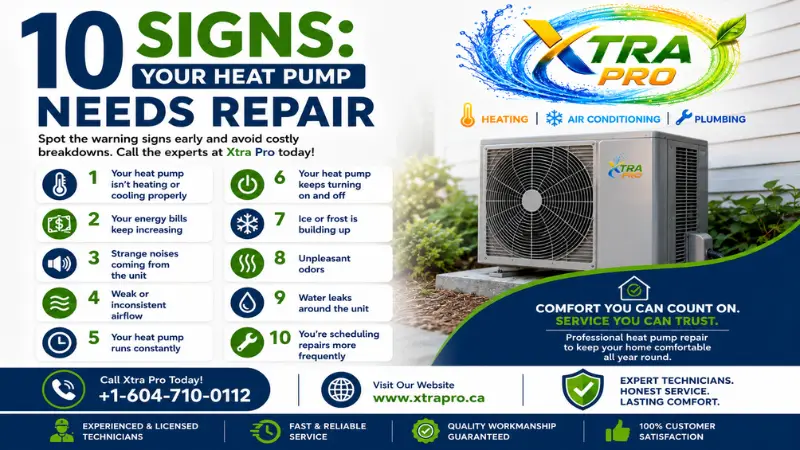
Common causes: dirty air filter, incorrect thermostat settings, blocked outdoor unit, dirty indoor coil, restricted airflow, tripped breaker.
Steps before calling a technician:
1. Check thermostat settings
2. Replace dirty filters
3. Clear debris from around the outdoor unit
Unusual Noises
Grinding, buzzing, clicking, rattling, or squealing sounds typically indicate loose parts, fan problems, electrical issues, or debris inside the unit.
Ice Buildup
A light layer of frost on the outdoor unit is normal. Excessive ice buildup indicates dirty coils, low refrigerant, restricted airflow, or a defrost cycle malfunction.
Rising Energy Bills
A sudden increase in energy costs is commonly caused by dirty filters, low refrigerant, aging components, or dirty coils.
If these steps don’t resolve the issue, contact a licensed HVAC technician.
Heat Pump Maintenance Services
Routine heat pump maintenance improves efficiency, extends equipment life, and reduces repair costs. Most HVAC professionals recommend servicing a heat pump once a year, or twice a year for heavy-use systems.
A professional maintenance visit includes:
· Electrical inspection
· Refrigerant check
· Thermostat calibration
· Airflow testing
· Coil cleaning
· Drain cleaning
· Safety inspection
· Performance testing
Benefits of regular maintenance:
· Improved efficiency
· Lower utility bills
· Better indoor air quality
· Fewer breakdowns
· Longer equipment life
· Lower repair costs
When to Consider Heat Pump Replacement
Most residential heat pumps should be replaced after 10–15 years. If your system requires frequent or expensive repairs, it may be time to consider a professional heat pump replacement to restore energy efficiency and reliable performance.
Signs a heat pump needs replacement:
· System is 10–15 years old
· Frequent repairs
· Rising energy bills
· Uneven temperatures
· Excessive noise
· Poor overall performance
Newer systems offer:
· Variable-speed compressors
· Inverter technology
· Smart thermostat compatibility
· Better humidity control
· Higher efficiency
Heat Pump Installation Cost Factors
Summary: Heat pump installation costs are determined by four main factors home size, system type, existing HVAC infrastructure, and efficiency ratings.
| Factor | Impact on Cost |
| Home size | Larger homes need higher-capacity equipment |
| System type | Geothermal costs more upfront than air-source or mini-split |
| Existing infrastructure | New ductwork or electrical upgrades add cost |
| Efficiency ratings | Higher SEER/HSPF ratings raise upfront cost but lower long-term expenses |
Home Size
Larger homes require larger-capacity equipment. Relevant factors include square footage, ceiling height, insulation, and window placement.
Type of Heat Pump
Costs vary by system type: air-source, mini-split, multi-zone, geothermal, and hybrid systems each have different price points.
Existing HVAC Infrastructure
Additional costs may include new ductwork, electrical upgrades, thermostat replacement, refrigerant line installation, or outdoor equipment preparation.
Energy Efficiency Ratings
Higher SEER and HSPF ratings result in higher upfront costs but greater long-term savings through lower operating expenses.
Tips for Maximizing Heat Pump Performance
1. Replace air filters regularly to improve airflow, indoor air quality, and equipment efficiency.
2. Schedule annual maintenance to prevent expensive repairs and maintain peak performance.
3. Keep the outdoor unit clear of leaves, dirt, snow, and vegetation to maintain unrestricted airflow.
4. Use a smart thermostat to create schedules, adjust temperatures remotely, and monitor energy usage.
5. Address repairs promptly when you notice strange noises, weak airflow, uneven temperatures, or frequent cycling.
Frequently Asked Questions
Are heat pumps effective during winter?
Yes. Modern cold-climate heat pumps provide reliable heating even in low outdoor temperatures.
How long does a heat pump last?
Most residential heat pumps last 10–15 years with proper installation and maintenance.
How often should a heat pump be serviced?
At least once per year. Homes using the system year-round should consider biannual maintenance.
Is a heat pump worth the investment?
Yes. Heat pumps offer lower energy bills, better comfort, quieter operation, and long-term savings compared to traditional furnace and air conditioner systems.
Can a heat pump replace both a furnace and an air conditioner?
Yes. In most homes, one heat pump can handle both heating and cooling, eliminating the need for two separate systems.
How long does heat pump installation take?
Most residential heat pump installations are completed within 1–2 days.
Can a heat pump be installed in an older home?
Yes. Ductless mini-split systems are especially suitable for older homes without existing ductwork.
Do Heat Pumps Qualify for Rebates?
Yes. Many heat pumps qualify for government or utility rebates, depending on your location and the type of system installed. Check local rebate programs before installation.
How Much Electricity Does a Heat Pump Use?
A heat pump uses electricity to transfer heat, making it more energy-efficient than many traditional heating systems. Actual electricity use depends on your home’s size, climate, and system efficiency.
Can a Heat Pump Work During a Power Outage?
No. A heat pump requires electricity to operate, so it will not work during a power outage unless connected to a backup power source, such as a generator or battery system.
Why Choose Xtra Pro?
Xtra Pro Heating, Air Conditioning & Plumbing Ltd provides professional heat pump installation, maintenance, and repair services for homeowners in the Lower Mainland.
Why homeowners choose Xtra Pro:
· Professional heat pump installation
· Experienced, licensed HVAC technicians
· Expert system recommendations
· Transparent pricing
· Quality workmanship
· Reliable maintenance and repairs
· Friendly customer service
Conclusion
Installing a heat pump lowers energy bills, combines heating and cooling into a single system, improves indoor air quality, and increases home value. Professional installation ensures correct sizing, safe electrical work, and long-term reliability. Regular maintenance extends system lifespan, and replacement should be considered after 10–15 years or when repairs become frequent.
Homeowners planning a heat pump installation in Vancouver or Port Coquitlam should work with experienced, licensed HVAC professionals to ensure long-term performance, safety, and comfort.