
Poly B Pipe Replacement: 7 Hidden Risks That Can Affect Your HVAC System
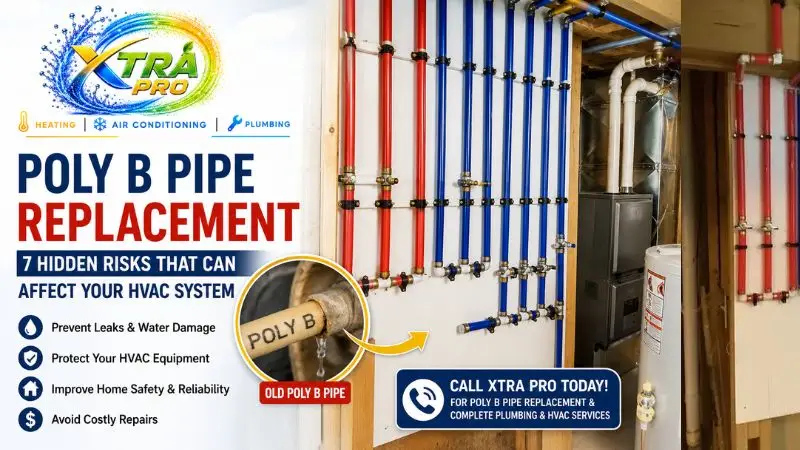
Poly B pipe replacement is often considered a plumbing project, but aging Poly-B plumbing can create problems that extend beyond your water supply system. In homes with older plumbing, a leaking or deteriorating Poly-B pipe can affect areas around furnaces, water heaters, air conditioning equipment, heat pumps, electrical components, insulation, and other mechanical systems. Poly-B pipes, also known as polybutylene pipes, were commonly used in residential plumbing systems built between the late 1970s and the mid-1990s. Over time, these pipes can become brittle and more vulnerable to leaks, especially when exposed to chlorine-treated water and changing temperatures. For homeowners, the important question is not simply whether Poly-B plumbing is old. It is whether the piping is creating a risk to the home and its HVAC and mechanical equipment. If you have Poly-B plumbing, understanding the warning signs, replacement process, costs, and potential HVAC impact can help you make a more informed decision. What Are Poly B Pipes? Poly-B pipes are a type of flexible plastic plumbing pipe that was used extensively in residential water distribution systems. They were popular because they were: However, Poly-B piping can deteriorate over time. The material may become brittle, while fittings and connections can also become vulnerable to failure. A Poly-B plumbing system may still appear functional even when deterioration is occurring inside the pipe. This is one reason homeowners may not realize they need Poly B pipe replacement until a leak or plumbing failure occurs. Does Polybutylene Pipe Need to Be Replaced? Polybutylene pipe does not necessarily fail immediately simply because of its age. However, many homeowners choose proactive replacement because the material has a history of premature deterioration and unexpected leaks. Replacement becomes particularly important when you notice: A professional plumbing inspection can help determine the condition of your existing piping and whether replacing the system is appropriate. Why Replace Poly-B Plumbing? One of the biggest reasons for replacing Poly-B plumbing is risk reduction. A failed pipe can release a significant amount of water into a home. Depending on where the pipe fails, the resulting water damage can affect flooring, drywall, insulation, electrical systems, mechanical equipment, and HVAC components. Replacing aging Poly-B pipes with a modern plumbing material can provide homeowners with a more reliable water distribution system and reduce the possibility of unexpected plumbing failures. But there is another concern that homeowners sometimes overlook: A plumbing leak can affect HVAC equipment. Let’s look at seven ways this can happen. 7 Hidden Risks of Poly B Pipes That Can Affect Your HVAC System 1. Water Leaks Can Damage Furnace Components A Poly-B pipe located near a furnace can create a serious problem if it develops a leak. Water can reach electrical components, controls, wiring, sensors, or other furnace parts. Even a relatively small leak can become problematic if water continues to accumulate around the equipment. Depending on the location and severity of the leak, homeowners may experience: This is why plumbing leaks near mechanical equipment should not be ignored. 2. Water Damage Can Affect HVAC Electrical Systems Modern HVAC equipment depends on electrical components to operate safely and efficiently. A leaking Poly-B pipe near an HVAC system can expose wiring, control boards, disconnects, and other electrical components to moisture. Water and electricity create a particularly serious combination. Even when HVAC equipment continues working after a leak, moisture can contribute to corrosion and deterioration that may cause problems later. Professional inspection is important whenever water has reached an HVAC system or its electrical components. 3. Leaks Can Damage Insulation Around HVAC Equipment Insulation helps maintain temperature control and improve energy efficiency throughout a home. A plumbing leak can saturate insulation around: Wet insulation can lose some of its effectiveness and may take considerable time to dry, particularly in enclosed areas. If the source of moisture is not corrected, replacing damaged insulation alone will not solve the underlying problem. 4. Poly-B Leaks Can Affect Heat Pumps and Air Conditioning Systems Heat pumps and air conditioning systems often have indoor components located in basements, utility rooms, closets, or mechanical areas. If a Poly-B pipe fails nearby, water can spread into these spaces and potentially affect HVAC equipment. For example, water can reach: This doesn’t mean Poly-B directly damages a heat pump or air conditioner. The risk comes from water released by a failed plumbing pipe interacting with nearby HVAC equipment. That distinction is important. 5. Water Damage Can Increase HVAC Maintenance Problems Moisture around HVAC equipment can create conditions that contribute to corrosion, insulation damage, electrical deterioration, and other maintenance issues. A homeowner may initially notice a plumbing leak but later discover that HVAC performance has also been affected. This can make the overall repair more expensive because the problem is no longer limited to plumbing. Replacing deteriorating Poly-B piping can therefore be part of a broader strategy to protect important systems within the home. 6. Hidden Plumbing Leaks Can Damage Walls Around HVAC Ductwork Not every Poly-B leak happens in an exposed location. Some pipes run through walls, ceilings, floors, or areas near ductwork. A hidden leak can continue for an extended period before visible water damage appears. By the time a homeowner notices: the surrounding materials may already have been affected. If HVAC ducts or components are located in the same area, moisture can create additional problems. 7. Major Water Damage Can Increase HVAC Repair or Replacement Costs The most significant hidden risk is the chain reaction caused by a plumbing failure. A single failed Poly-B pipe could potentially lead to: Pipe failure → water leak → water damage → HVAC exposure → equipment damage → additional repair costs The actual outcome depends on where the pipe fails and how quickly the leak is discovered. This is why replacing aging Poly-B plumbing can be viewed as more than a plumbing upgrade. It can also be a way to reduce the risk of water damage to other critical home systems. Replacing Poly B Piping: What Are Your Options? When replacing Poly-B plumbing, homeowners typically
Top Benefits of Heat Pump Installation for Your Home
A heat pump is an energy-efficient heating and cooling system that transfers heat rather than generating it through combustion. By moving heat instead of creating it, heat pumps can use significantly less energy than many traditional heating systems while providing reliable year-round comfort. A professionally installed heat pump can help lower utility bills, improve indoor air quality, reduce environmental impact, and increase your home’s overall value. Most residential heat pump installations are completed within one to two days, depending on the home’s layout, system type, and any required electrical or ductwork upgrades. If you’re looking for a more efficient way to heat and cool your home, a heat pump is one of the smartest long-term investments you can make. Unlike furnaces that burn fuel to produce heat, a heat pump uses electricity to transfer heat between the indoors and outdoors. During the winter, it extracts heat from the outside air and brings it inside, while in the summer, it reverses the process to keep your home cool and comfortable. Whether you’re replacing an aging furnace or installing a new HVAC system, a properly sized and professionally installed heat pump offers dependable performance, lower operating costs, and consistent indoor comfort throughout every season. What Is a Heat Pump? Definition: A heat pump is an electric HVAC system that heats and cools a home by transferring heat between indoor and outdoor air, rather than generating heat through combustion. How it works: · In winter: The heat pump extracts heat from outdoor air, even in cold temperatures, and moves it indoors. · In summer: The process reverses. The system removes heat from indoor air and releases it outside, cooling the home. Core Components of a Heat Pump Component Function Compressor Pressurizes refrigerant to move heat Refrigerant Carries heat between indoor and outdoor units Indoor coil Absorbs or releases heat inside the home Outdoor coil Absorbs or releases heat outside the home Expansion valve Regulates refrigerant flow and pressure Features of Modern Heat Pumps · Variable-speed compressors · Inverter technology · Quiet operation · Precise temperature control · High energy efficiency (SEER and HSPF rated) Types of Heat Pumps There are four main types of residential heat pumps air-source, ductless mini-split, ground-source (geothermal), and hybrid. Each suits different home layouts and budgets. Type Best For Key Advantage Air-Source Heat Pump Most homes with existing ductwork Lower operating costs, easy installation Ductless Mini-Split Homes without ductwork Room-by-room control, high efficiency Ground-Source (Geothermal) Homeowners wanting maximum efficiency Very low running costs, long lifespan Hybrid System Cold climates Automatic switching between heat pump and furnace Air-Source Heat Pumps The most common residential heat pump. It transfers heat between indoor and outdoor air and works well in most home types. Benefits: efficient heating and cooling, lower operating costs, easy installation. Ductless Mini-Split Heat Pumps A ductless system designed for homes without existing ductwork, such as additions, older homes, or garages. Benefits: room-by-room temperature control, higher efficiency, reduced energy waste. Ground-Source (Geothermal) Heat Pumps A system that uses stable underground temperatures to heat and cool a home. Benefits: outstanding efficiency, very low operating costs, long lifespan. Trade-off: higher upfront installation cost. Hybrid Heat Pump Systems A system that pairs a heat pump with a traditional furnace and automatically switches between the two based on outdoor temperature. Benefit: maximizes efficiency in regions with cold winters. Top Benefits of Heat Pump Installation The seven core benefits of heat pump installation are lower energy bills, combined heating and cooling, consistent comfort, environmental benefits, quiet operation, better indoor air quality, and increased home value. 1. Lower Energy Consumption Heat pumps transfer heat rather than generate it, which lowers electricity use compared to furnaces and baseboard heaters. Result: lower monthly utility bills, reduced energy waste, long-term cost savings. 2. Heating and Cooling in One System A single heat pump replaces both a furnace and an air conditioner. Result: simplified maintenance, one system instead of two. 3. Year-Round Indoor Comfort Heat pumps deliver steady, continuous airflow instead of short bursts of hot or cold air. Result: even temperatures, fewer hot and cold spots, better humidity control. 4. Environmental Benefits Lower electricity consumption reduces a home’s environmental impact. Result: fewer greenhouse gas emissions, less fossil fuel dependence, improved sustainability. 5. Quiet Operation Modern heat pumps run more quietly than older HVAC systems, due to variable-speed compressors and improved fan design. Result: suitable for bedrooms, home offices, and quiet neighborhoods. 6. Improved Indoor Air Quality Heat pumps continuously circulate and filter indoor air. Result: reduced dust, allergens, pet dander, and airborne particles. Regular filter replacement further improves air quality. 7. Increased Home Value Energy-efficient upgrades increase resale appeal. Result: lower operating costs, modern HVAC technology, reduced maintenance, year-round comfort for future buyers. Why Professional Heat Pump Installation Matters Professional installation directly affects a heat pump’s efficiency, lifespan, and warranty validity. Incorrect installation is one of the leading causes of heat pump underperformance. A licensed HVAC technician ensures: · Correct system sizing for the home · Safe electrical connections · Proper refrigerant charging · Optimal indoor and outdoor unit placement · Maximum energy efficiency · Compliance with manufacturer warranty terms Consequences of improper installation: · Higher utility bills · Uneven indoor temperatures · Frequent breakdowns · Reduced system lifespan Heat Pump Installation in Vancouver Vancouver’s moderate, temperate climate allows heat pumps to operate efficiently throughout the year, making them a practical choice for both winter heating and summer cooling in the region. Benefits for Vancouver homeowners: · Reliable winter heating · Efficient summer cooling · Lower electricity consumption · Reduced dependence on traditional heating systems · Consistent indoor comfort Factors to evaluate before installation: · Home size · Existing ductwork · SEER rating (cooling efficiency) ·
Is Your AC in Trouble? 11 Warning Signs You Shouldn’t Ignore
A sudden air conditioner breakdown can quickly turn your comfortable home into an unbearable living space-especially during the peak of summer. While some air conditioning issues can wait for a scheduled appointment, others demand immediate professional attention to prevent costly repairs, safety hazards, and complete system failure.Knowing the warning signs of an emergency can help you protect your HVAC system, reduce repair costs, and restore comfort faster. In this blog, we’ll explore 11 common AC problems that require emergency air conditioning repair and explain why acting quickly matters. 1. Your Air Conditioner Is Blowing Warm Air If your AC is running but only blowing warm or room-temperature air, it’s often a sign of a serious issue rather than a simple inconvenience. Possible causes include: Ignoring this issue forces your system to work harder, increasing energy bills while putting additional strain on expensive components. 2. Burning Smell Coming from the AC A burning odor should never be ignored.It may indicate: Turn off your air conditioner immediately and call an HVAC professional. Continuing to operate the system could create a serious fire risk. 3. Loud Grinding, Banging, or Screeching Noises Air conditioners should operate quietly. If you hear unusual noises, something inside the system is likely damaged.Common causes include: Prompt repairs often prevent small mechanical problems from turning into expensive replacements. 4. Refrigerant Leaks Refrigerants are essential for cooling your home. If levels become low due to a leak, your AC cannot cool efficiently.Signs of a refrigerant leak include: Only licensed HVAC technicians should handle refrigerant repairs. 5. Your Circuit Breaker Keeps Tripping If your AC repeatedly trips the breaker, don’t keep resetting it.Possible reasons include: Electrical issues can become dangerous if ignored and should always be inspected immediately. 6. Frozen Evaporator Coils Ice on your indoor unit isn’t normal.Frozen coils may result from: Running your AC with frozen coils can damage the compressor and significantly increase repair costs. 7. Water Leaking Around Your Indoor Unit While condensation is expected, excessive water around your AC usually indicates a problem.Potential causes include: Ignoring leaks can damage flooring, ceilings, drywall, and encourage mold growth. 8. Your AC Won’t Turn On If your thermostat appears to work but your AC refuses to start, the issue could involve: A complete shutdown usually requires professional diagnosis and emergency repair. 9. Smoke Coming from the Air Conditioner Smoke is one of the most serious warning signs.If you notice smoke: Smoke often indicates overheating electrical components or severe internal failure. 10. Weak or No Airflow Poor airflow reduces comfort and forces your AC to work much harder.Possible causes include: Prompt repairs improve efficiency and help prevent additional damage. 11. Your AC Keeps Turning On and Off Short cycling occurs when the air conditioner repeatedly starts and stops without completing a cooling cycle.Common causes include: Short cycling increases wear on your compressor and shortens your system’s lifespan. What to Do Before an Emergency HVAC Technician Arrives While waiting for professional help, you can take a few safe precautions: Never attempt electrical or refrigerant repairs yourself, as these require specialized tools and training. Why Delaying Emergency AC Repairs Can Cost You More Many homeowners wait, hoping the issue will resolve itself. Unfortunately, delaying repairs often leads to: Addressing problems early is almost always more affordable than replacing major HVAC components. Why Choose Xtra Pro for Emergency AC Repair? When your air conditioner stops working, you need more than a quick fix-you need a trusted HVAC company that responds promptly and gets the job done right. Xtra Pro Heating, Air Conditioning & Plumbing Ltd. is proud to provide dependable emergency AC repair services for homeowners throughout the Lower Mainland, BC. Here’s why homeowners choose Xtra Pro: Whether your AC has stopped cooling, is making unusual noises, or has completely shut down, Xtra Pro is ready to help you get your system back up and running as quickly as possible. Prevent Future AC Emergencies The best way to avoid emergency repairs is through regular maintenance.Professional AC maintenance helps: Scheduling annual maintenance before peak cooling season is one of the smartest investments homeowners can make. Final Thoughts An air conditioner rarely fails without warning. Warm air, unusual noises, water leaks, electrical problems, and short cycling are all signs that your system needs immediate attention. Acting quickly can help prevent costly repairs, improve energy efficiency, and protect your family’s comfort.If you notice any of these warning signs, don’t wait until the problem becomes worse. Contact Xtra Pro Heating, Air Conditioning & Plumbing Ltd. for fast, professional emergency AC repair services. Our experienced team is committed to restoring your cooling system safely, efficiently, and with the reliable service of homeowners across the Lower Mainland trust. Frequently Asked Questions 1. What is considered an emergency air conditioner repair? Emergency air conditioner repair is needed when your AC stops cooling during extreme heat, won’t turn on, leaks refrigerant or water, emits burning smells, makes loud grinding noises, or experiences electrical issues. These problems should be addressed immediately to prevent further damage and restore your home’s comfort. 2. When should I call for emergency air conditioner repair? You should call for emergency air conditioner repair as soon as you notice signs such as warm air blowing from the vents, no airflow, repeated circuit breaker trips, smoke, unusual noises, or a complete system breakdown. Prompt service can help avoid costly repairs and extended downtime. 3. How quickly can an emergency air conditioner repair be completed? The repair time depends on the cause of the problem. Minor issues like faulty capacitors or clogged drain lines may be resolved within a few hours, while more complex repairs involving compressors or refrigerant leaks can take longer. A professional HVAC technician can diagnose the issue and provide an accurate repair timeline. 4. Can I use my AC while waiting for emergency air conditioner repair? It’s best to turn off your air conditioner if it’s making unusual noises, blowing warm air, leaking refrigerant, or producing burning smells. Continuing to operate a damaged system can lead to more extensive repairs and may create
10 Signs: Your Heat Pump Needs Repair
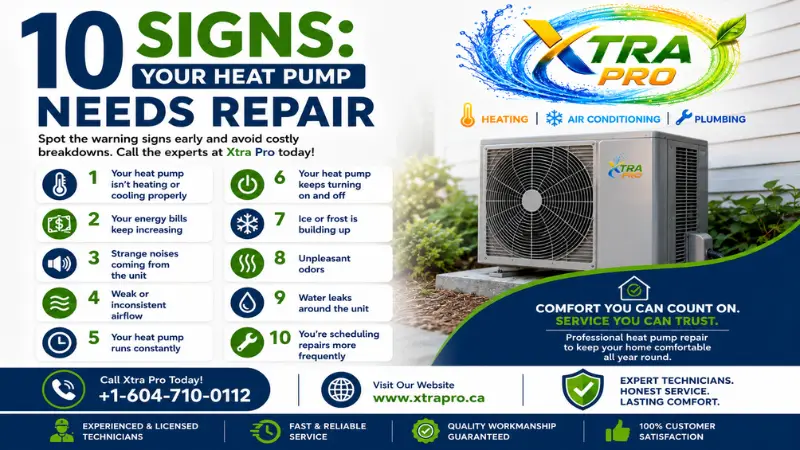
Introduction A heat pump is one of the hardest-working systems in your home, that provides efficient heating during the winter and dependable cooling throughout the summer. Because it operates year-round, it naturally experiences wear and tear over time. While minor issues may seem harmless at first, ignoring them can lead to reduced efficiency, higher energy bills, expensive repairs, or even complete system failure. The good news is that your heat pump often gives warning signs before a major breakdown occurs. Recognizing these early symptoms allows you to schedule professional repairs before a small issue becomes a costly problem. We’ll discuss the ten most common signs your heat pump needs repair, why these problems occur, and how timely service can help extend the life of your HVAC system while keeping your home comfortable in every season. Here are the points below: 1. Your Heat Pump Isn’t Heating or Cooling Properly One of the first signs something is wrong is inconsistent indoor comfort. If your heat pump struggles to warm your home during winter or fails to keep it cool during summer, the system is likely operating below peak performance. Several issues can reduce heating and cooling capacity, including: If adjusting your thermostat doesn’t solve the problem, it’s time to schedule a professional inspection. 2. Your Energy Bills Keep Increasing Have your electricity bills increased even though your energy usage hasn’t changed? An inefficient heat pump often consumes more electricity because it must run longer to maintain the desired indoor temperature. Higher energy bills may result from: Repairing these issues promptly can restore efficiency and reduce monthly operating costs. 3. Strange Noises Coming From the Unit Heat pumps normally produce a soft humming sound while operating. Loud or unusual noises are usually signs that internal components need attention. Watch for sounds such as: These noises may indicate loose components, worn bearings, electrical problems, or compressor issues. Ignoring them could result in more extensive damage over time. 4. Weak or Inconsistent Airflow If little air is coming from your vents, your heat pump may be struggling to circulate conditioned air throughout your home. Common causes include: Poor airflow forces your system to work harder, reducing efficiency while increasing wear on critical components. 5. Your Heat Pump Runs Constantly During extremely hot or cold weather, longer operating cycles are normal. However, your heat pump should still cycle off periodically. If it seems to run continuously throughout the day, possible causes include: Continuous operation not only increases electricity costs but also shortens the lifespan of your equipment. 6. Your Heat Pump Keeps Turning On and Off Short cycling occurs when your heat pump starts and stops repeatedly without completing a full heating or cooling cycle. Possible causes include: Frequent cycling increases wear on important components while reducing comfort and efficiency. 7. Ice or Frost Is Building Up It’s normal for a heat pump to develop a light layer of frost during winter before entering its automatic defrost cycle. However, excessive ice buildup or frost that doesn’t disappear is a sign that something isn’t working properly. Possible causes include: Ignoring excessive ice buildup can eventually damage expensive components such as the compressor. 8. Unpleasant Odors A properly functioning heat pump shouldn’t produce unpleasant smells. Different odors often indicate different problems: If unusual odors continue after replacing the air filter, contact a qualified HVAC technician as soon as possible. 9. Water Leaks Around the Unit Water pooling around your indoor unit is never normal and should be investigated promptly. Possible causes include: Ignoring leaks can lead to water damage, mold growth, and additional repair costs. 10. You’re Scheduling Repairs More Frequently If your heat pump requires repairs every few months, it may be nearing the end of its service life.Repeated repairs often indicate that major components have begun to wear out due to age or prolonged use.Instead of continuing to invest in frequent repairs, ask an HVAC professional whether replacing the system would be the more cost-effective long-term solution. Why You Shouldn’t Ignore Heat Pump Problems Many homeowners continue using a heat pump even when it’s no longer performing efficiently. Unfortunately, HVAC problems rarely fix themselves. Instead, small issues gradually become larger ones as the system works harder to maintain your desired indoor temperature. A neglected heat pump may consume significantly more electricity, reduce indoor comfort, and place excessive strain on expensive components such as the compressor, fan motor, and reversing valve. Prompt repairs can help you: Addressing problems early is almost always more affordable than waiting for a complete system failure. Repair or Replace: How to Decide Not every heat pump issue requires a full replacement. In many cases, timely repairs can restore performance and extend the life of your system. However, replacement may be the better investment if: A licensed HVAC technician can evaluate your system’s condition and help you determine whether repair or replacement offers the greatest long-term value. Final Thoughts Your heat pump works hard to keep your home comfortable all year, but it needs regular care to perform efficiently. If you notice problems like poor heating or cooling, higher energy bills, strange noises, weak airflow, ice buildup, or water leaks, don’t ignore them. Fixing small issues early can help prevent expensive repairs and extend the life of your system. If your heat pump isn’t working properly, Xtra Pro is here to help. Our experienced technicians provide reliable heat pump repair services with honest recommendations, quality workmanship, and friendly customer service to keep your home comfortable in every season. FAQs 1. How do I know if my heat pump needs repair or just a filter change? Start with the simple stuff and replace the air filter first. If problems like weak airflow, odd smells, or high energy bills continue after that, the issue likely goes deeper (refrigerant, motor, or coil issues) and it’s time to call a technician. 2. Is it normal for my heat pump to have frost on it in winter? Yes, a light layer of frost is normal and usually clears during the