
Poly B Pipe Replacement: 7 Hidden Risks That Can Affect Your HVAC System
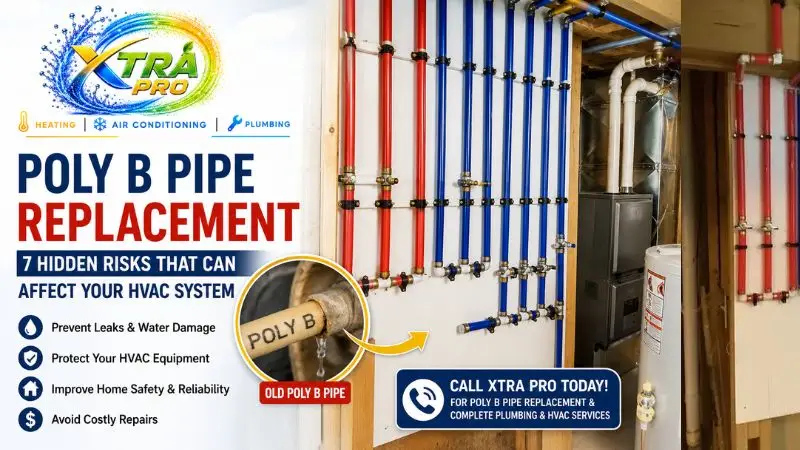
Poly B pipe replacement is often considered a plumbing project, but aging Poly-B plumbing can create problems that extend beyond your water supply system. In homes with older plumbing, a leaking or deteriorating Poly-B pipe can affect areas around furnaces, water heaters, air conditioning equipment, heat pumps, electrical components, insulation, and other mechanical systems. Poly-B pipes, also known as polybutylene pipes, were commonly used in residential plumbing systems built between the late 1970s and the mid-1990s. Over time, these pipes can become brittle and more vulnerable to leaks, especially when exposed to chlorine-treated water and changing temperatures. For homeowners, the important question is not simply whether Poly-B plumbing is old. It is whether the piping is creating a risk to the home and its HVAC and mechanical equipment. If you have Poly-B plumbing, understanding the warning signs, replacement process, costs, and potential HVAC impact can help you make a more informed decision. What Are Poly B Pipes? Poly-B pipes are a type of flexible plastic plumbing pipe that was used extensively in residential water distribution systems. They were popular because they were: However, Poly-B piping can deteriorate over time. The material may become brittle, while fittings and connections can also become vulnerable to failure. A Poly-B plumbing system may still appear functional even when deterioration is occurring inside the pipe. This is one reason homeowners may not realize they need Poly B pipe replacement until a leak or plumbing failure occurs. Does Polybutylene Pipe Need to Be Replaced? Polybutylene pipe does not necessarily fail immediately simply because of its age. However, many homeowners choose proactive replacement because the material has a history of premature deterioration and unexpected leaks. Replacement becomes particularly important when you notice: A professional plumbing inspection can help determine the condition of your existing piping and whether replacing the system is appropriate. Why Replace Poly-B Plumbing? One of the biggest reasons for replacing Poly-B plumbing is risk reduction. A failed pipe can release a significant amount of water into a home. Depending on where the pipe fails, the resulting water damage can affect flooring, drywall, insulation, electrical systems, mechanical equipment, and HVAC components. Replacing aging Poly-B pipes with a modern plumbing material can provide homeowners with a more reliable water distribution system and reduce the possibility of unexpected plumbing failures. But there is another concern that homeowners sometimes overlook: A plumbing leak can affect HVAC equipment. Let’s look at seven ways this can happen. 7 Hidden Risks of Poly B Pipes That Can Affect Your HVAC System 1. Water Leaks Can Damage Furnace Components A Poly-B pipe located near a furnace can create a serious problem if it develops a leak. Water can reach electrical components, controls, wiring, sensors, or other furnace parts. Even a relatively small leak can become problematic if water continues to accumulate around the equipment. Depending on the location and severity of the leak, homeowners may experience: This is why plumbing leaks near mechanical equipment should not be ignored. 2. Water Damage Can Affect HVAC Electrical Systems Modern HVAC equipment depends on electrical components to operate safely and efficiently. A leaking Poly-B pipe near an HVAC system can expose wiring, control boards, disconnects, and other electrical components to moisture. Water and electricity create a particularly serious combination. Even when HVAC equipment continues working after a leak, moisture can contribute to corrosion and deterioration that may cause problems later. Professional inspection is important whenever water has reached an HVAC system or its electrical components. 3. Leaks Can Damage Insulation Around HVAC Equipment Insulation helps maintain temperature control and improve energy efficiency throughout a home. A plumbing leak can saturate insulation around: Wet insulation can lose some of its effectiveness and may take considerable time to dry, particularly in enclosed areas. If the source of moisture is not corrected, replacing damaged insulation alone will not solve the underlying problem. 4. Poly-B Leaks Can Affect Heat Pumps and Air Conditioning Systems Heat pumps and air conditioning systems often have indoor components located in basements, utility rooms, closets, or mechanical areas. If a Poly-B pipe fails nearby, water can spread into these spaces and potentially affect HVAC equipment. For example, water can reach: This doesn’t mean Poly-B directly damages a heat pump or air conditioner. The risk comes from water released by a failed plumbing pipe interacting with nearby HVAC equipment. That distinction is important. 5. Water Damage Can Increase HVAC Maintenance Problems Moisture around HVAC equipment can create conditions that contribute to corrosion, insulation damage, electrical deterioration, and other maintenance issues. A homeowner may initially notice a plumbing leak but later discover that HVAC performance has also been affected. This can make the overall repair more expensive because the problem is no longer limited to plumbing. Replacing deteriorating Poly-B piping can therefore be part of a broader strategy to protect important systems within the home. 6. Hidden Plumbing Leaks Can Damage Walls Around HVAC Ductwork Not every Poly-B leak happens in an exposed location. Some pipes run through walls, ceilings, floors, or areas near ductwork. A hidden leak can continue for an extended period before visible water damage appears. By the time a homeowner notices: the surrounding materials may already have been affected. If HVAC ducts or components are located in the same area, moisture can create additional problems. 7. Major Water Damage Can Increase HVAC Repair or Replacement Costs The most significant hidden risk is the chain reaction caused by a plumbing failure. A single failed Poly-B pipe could potentially lead to: Pipe failure → water leak → water damage → HVAC exposure → equipment damage → additional repair costs The actual outcome depends on where the pipe fails and how quickly the leak is discovered. This is why replacing aging Poly-B plumbing can be viewed as more than a plumbing upgrade. It can also be a way to reduce the risk of water damage to other critical home systems. Replacing Poly B Piping: What Are Your Options? When replacing Poly-B plumbing, homeowners typically